

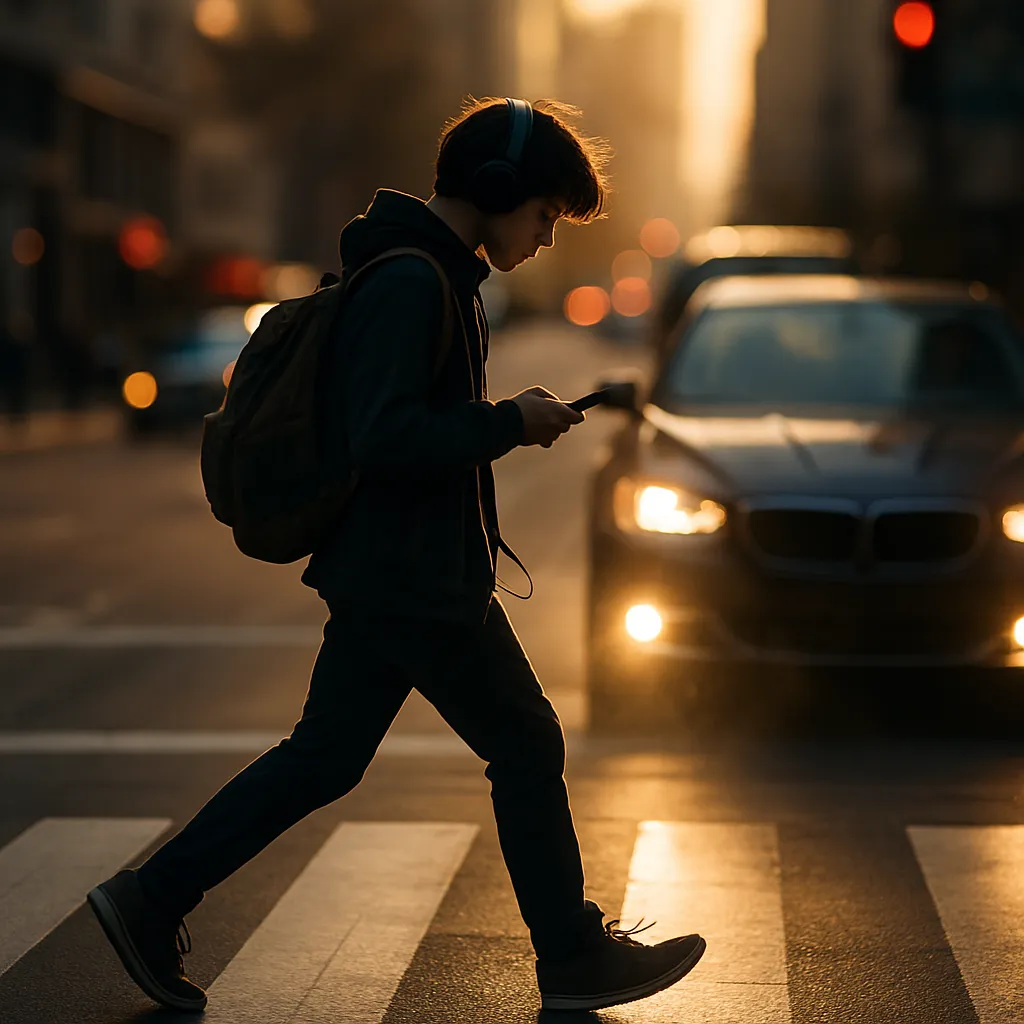
Kentucky Pedestrian Accident Lawyers
When a vehicle strikes someone on foot, the injuries are almost always catastrophic.
Kentucky recorded 1,357 pedestrian-involved traffic collisions in 2023, resulting in 112 fatalities, according to the Kentucky State Police Crash Facts report. When a vehicle strikes an unprotected person, the resulting injuries are severe. Sam Aguiar Injury Lawyers holds reckless drivers and negligent parties accountable and pursues every dollar of compensation pedestrian victims and their families are owed, including a recent $6.2 million settlement for a Kentucky pedestrian injury case.
Common Types of Pedestrian Accidents
Pedestrian accidents occur in a wide range of situations, most of them caused by driver inattention or outright disregard for traffic laws. Below are the most frequently encountered scenarios in Kentucky cases.
Crosswalk Strikes
Pedestrians crossing within marked or unmarked crosswalks are struck by drivers who fail to yield the right of way, often due to inattention or a failure to judge the pedestrian’s position and speed. Kentucky law requires all motorists to yield to pedestrians in crosswalks at intersections.
Hit-and-Run Accidents
These crashes involve drivers who strike a pedestrian and leave the scene without stopping to render aid or identify themselves. Hit-and-run victims face additional challenges in pursuing compensation, but uninsured motorist (UM) coverage and the Kentucky Assigned Claims Plan both provide recovery paths.
Turning Vehicle Strikes
Drivers turning at intersections often focus on oncoming traffic and fail to check the crosswalk they are turning into. This is one of the most common pedestrian crash patterns, particularly at multi-lane intersections and roundabouts across Louisville.
Parking Lot Backing Crashes
Large SUVs and trucks have substantial blind zones behind the vehicle. Drivers backing out of parking spaces or driveways without checking their surroundings strike pedestrians more often than most people realize, particularly children and elderly individuals.
School Zones and Residential Areas
Children are particularly vulnerable in school zones and residential neighborhoods, where drivers may not anticipate the presence of young pedestrians or may disregard posted speed limits and crossing signals.
Distracted and Impaired Driving
A driver looking at a phone for even two seconds at 35 mph travels over 100 feet without seeing the road. Distracted driving is the leading contributor to pedestrian crashes in urban settings. Drivers under the influence of alcohol or drugs compound the danger: nighttime pedestrian fatalities are disproportionately caused by impaired drivers.

“They ACTUALLY CARE! They go above and beyond for their clients and protect you every step of the way.”
— Samantha F.
Kentucky Right-of-Way Laws
In Kentucky, pedestrian right-of-way laws require motorists to yield to pedestrians crossing within any marked or unmarked crosswalk at intersections, particularly in high-traffic areas such as schools, parks, and commercial districts.
When a pedestrian signal indicates it is safe to cross, pedestrians have the right of way and all vehicles must yield. In contrast, pedestrians must respect “Do Not Walk” signals, acknowledging the right-of-way of cars.
Pedestrians on sidewalks have the right-of-way over vehicles entering or exiting driveways or alleys. However, pedestrians must yield to vehicles when crossing roadways at points other than designated crosswalks.
Kentucky law requires drivers to exercise due care to avoid colliding with pedestrians under all circumstances, with heightened caution required in areas frequented by children and near stop lights.
Establishing Negligence in Pedestrian Cases
Proving negligence in a pedestrian accident involves establishing several key elements: that the defendant owed a duty of care to the injured person, that this duty was breached through an act or omission, and that this breach directly caused the injuries and resulting damages.
Common examples of negligence in Kentucky pedestrian accidents include failing to yield the right of way in crosswalks, speeding in residential areas, and distracted driving that compromises pedestrian safety. When these actions cause injury or death to a pedestrian, they form the basis of a negligence claim.
Successfully proving these elements requires the collection and preservation of evidence, which is why early involvement of an attorney matters.
Evidence in Pedestrian Accident Claims
Gathering comprehensive evidence is critical in pedestrian accident cases. The most important types of evidence include:
Eyewitness Testimony
Eyewitness accounts provide firsthand descriptions of the incident, including the pedestrian’s and driver’s actions, traffic signal status, and the sequence of events. Credible eyewitnesses can significantly strengthen a claim.
Surveillance and Traffic Camera Footage
Video evidence from traffic cameras, nearby businesses, or private residences can capture the precise moment of impact, vehicle speed, and whether the pedestrian signal was active. This type of evidence is often the most difficult to dispute. Sam Aguiar Injury Lawyers has exclusive access to statewide DOT and TriMarc camera archives.
Medical Records
Medical documentation from emergency room visits, surgeries, ongoing treatment, and long-term rehabilitation quantifies the injury’s impact. Detailed records are essential for establishing both economic and non-economic damages in a pedestrian claim.
Accident Reconstruction
Accident reconstruction uses scientific analysis of vehicle speed, angles of impact, road conditions, and environmental factors to create models showing exactly how the crash occurred. The findings from expert witnesses are often critical in court proceedings and settlement negotiations.
Who Could Be Liable for a Pedestrian Accident?
Pedestrian accidents often involve multiple parties. Determining full liability requires a thorough examination of all contributing factors.
- Drivers: Negligent or reckless driving, including speeding, failing to yield, or driving under the influence, is the most common basis for liability. Proving driver liability requires showing the driver breached their duty of care and that the breach caused the pedestrian’s injuries.
- Municipalities: Local governments responsible for maintaining roadways, sidewalks, and crosswalks can be held liable when poor maintenance, improper signage, or defective design contributed to a crash. Claims against municipalities involve specific procedural requirements and notice timelines.
- Vehicle manufacturers: When a vehicle defect, such as brake failure or faulty lighting, contributes to a crash, the manufacturer can be held liable. Demonstrating this form of liability requires expert analysis linking the defect to the accident.
- Property owners: Adjacent landowners may be liable when failure to maintain their property creates a pedestrian hazard, such as unaddressed ice accumulation or vegetation obstructing visibility at intersections.
- Construction companies: Third parties working near roadways can be liable when their activities create dangerous pedestrian conditions, including inadequate warning signs, debris in pedestrian paths, or temporary obstruction of crosswalks.
Recoverable Damages
Pedestrian accident victims in Kentucky can recover the full range of damages available in any personal injury case. Because the injuries are often catastrophic, these claims typically carry significant value.
- Medical expenses: Emergency care, hospital stays, surgeries, medications, physical therapy, assistive devices, and all future medical treatment
- Lost wages and earning capacity: Income lost during recovery and reduced earning potential from permanent disabilities
- Pain and suffering: Physical pain, emotional trauma, PTSD, anxiety, and loss of enjoyment of life
- Loss of consortium: Damages for a spouse or family member’s loss of companionship and support
- Disfigurement and scarring: Compensation for the physical and psychological toll of permanent visible injuries
- Wrongful death: When a pedestrian is killed, surviving family members can pursue funeral costs, lost financial support, and loss of companionship under KRS 411.130. Contact our Louisville wrongful death attorneys to discuss these cases.
In cases where the at-fault party acted with oppression, fraud, or malice, punitive damages may also be awarded to deter similar conduct in the future.
Kentucky’s no-fault PIP coverage under KRS 304.39 may apply if the pedestrian was a named insured on a Kentucky auto policy. Beyond PIP, a full tort claim against the at-fault driver covers every damage category above.
Pedestrians have rights on every road in Kentucky. When a driver violates those rights and someone gets hurt, Sam Aguiar Injury Lawyers pursues the maximum recovery. Our Bigger Share Guarantee® means you keep more of every dollar: no increased litigation fee, $0 Out-Of-Pocket, no matter what.
Frequently Asked Questions
Are car owners liable if an autonomous (self-driving) vehicle injures a pedestrian in Kentucky?
It depends on who or what was the primary cause, including the vehicle’s programming, the actions of a human driver (if present), and manufacturer liability. Kentucky law is still evolving in this area, but similar cases nationally have found that both the vehicle owner and the technology company could be named defendants.
Do I qualify as a pedestrian under the law if I was hit while using a wheelchair?
Yes. You do not have to be walking on two feet to claim injury as a “pedestrian.” Under Kentucky law, people on e-scooters, skateboards, and wheelchairs, including electric wheelchairs, can claim statutory negligence (negligence per se) against the at-fault driver if laws protecting pedestrians were violated.
How does using headphones or a phone affect my rights if I’m hit?
Using headphones or looking at your phone does not automatically make you at fault. However, insurance companies may argue you were “distracted” and “not exercising due care.” Kentucky is a pure comparative fault state, so that argument could reduce your recovery by whatever percentage of fault a jury assigns to you. It does not eliminate your claim.
Is jaywalking ever defensible in a Kentucky pedestrian case?
Even when a pedestrian jaywalks, drivers still have a duty to exercise due care. Each case turns on its specific facts. You may recover damages, but if you are found partially at fault, the court will reduce your award by the percentage of fault assigned to you under Kentucky’s pure comparative fault rules.
If the driver is never found, can I still receive compensation after a hit-and-run?
Yes, if you are an insured under a policy that includes uninsured motorist (UM) coverage. You should also qualify for PIP benefits, either under a policy covering you or through the Kentucky Assigned Claims Plan if no insured vehicle exists in your household. In hit-and-run cases where the driver is never identified, UM coverage is your primary path to recovery.